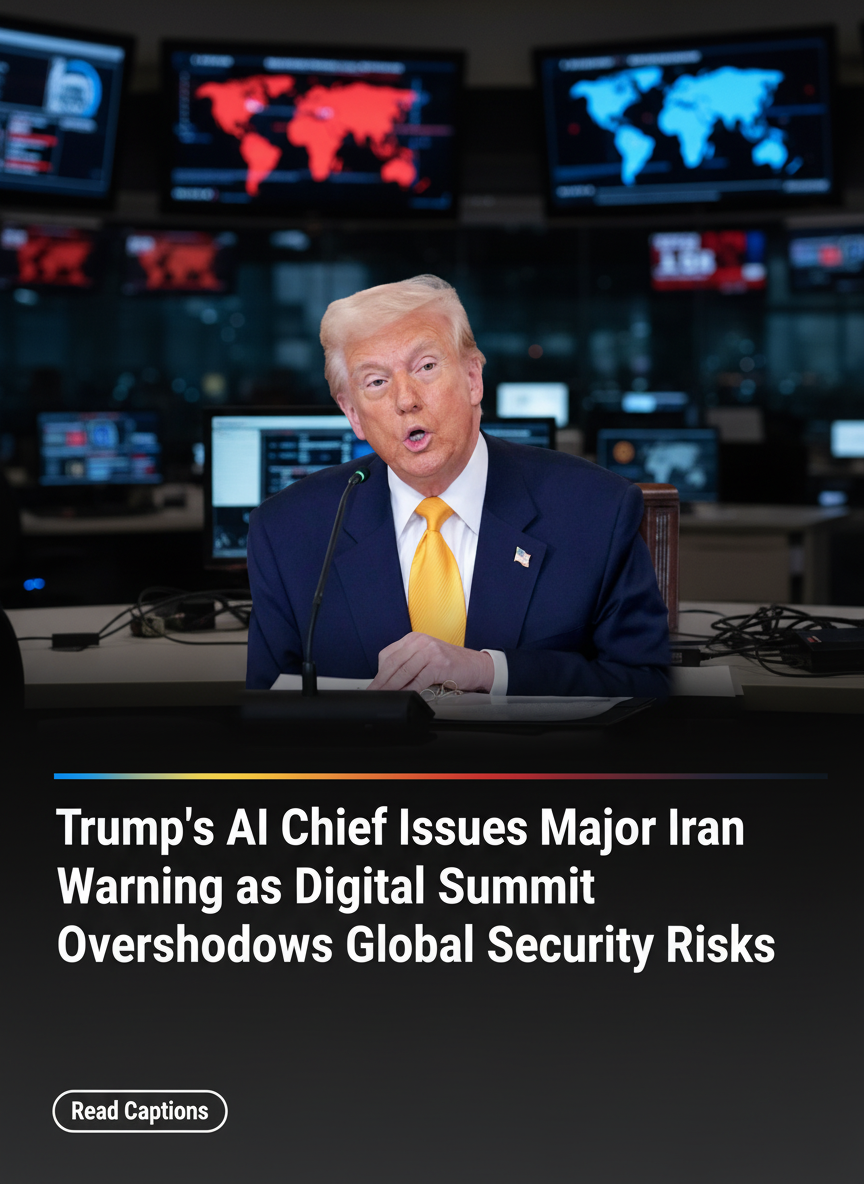
The Silent Alarm: Trump’s AI Chief David Sacks Issues Stark Iran Warning to a Distracted Digital Assets Summit
WASHINGTON, D.C. — In the high-velocity world of the second Trump administration, where tech moguls and political power brokers increasingly occupy the same stage, a significant geopolitical warning from the nation’s top AI advisor appears to have fallen on deaf ears. During the White House Digital Assets Summit held on Friday, March 7, 2025, David Sacks—President Trump’s newly minted “AI and Crypto Czar”—attempted to pivot the conversation toward a looming national security threat: Iran. However, the message struggled to find airtime amidst a crowd more focused on deregulation and market surges.
Geopolitics vs. Gains: A Tense Summit Atmosphere
The summit, which featured prominent figures including President Donald Trump and Treasury Secretary Scott Bessent, was intended to be a victory lap for the digital assets industry. Following a year of explosive growth in decentralized finance and the mainstreaming of prediction markets like Polymarket, the mood inside the White House was largely celebratory. Sacks, a venture capitalist turned government official, was expected to provide a roadmap for American AI dominance.
Instead, Sacks utilized his platform to issue a sobering warning regarding Iran’s evolving technological capabilities. According to sources present at the event, Sacks highlighted how adversaries are leveraging sophisticated AI and decentralized networks to bypass traditional sanctions and influence global sentiment. Despite the gravity of the “Iran warning,” the reaction from the audience of tech entrepreneurs and digital asset enthusiasts was described as markedly muted.
The Polymarket Paradox
The disconnect between Sacks’ warnings and the room’s energy highlights a growing tension within the administration’s tech policy. While Sacks is tasked with securing the nation’s technological infrastructure, much of his base—and the attendees at the summit—is focused on the “permissionless” nature of the new economy.
A central point of friction remains Polymarket, the decentralized prediction platform that has become a staple of political discourse. While the platform has been praised for its accuracy in predicting election outcomes, Sacks’ warning suggested that the same tools being used to “price in” political reality are also vulnerable to manipulation by foreign actors like Tehran. For a crowd that views regulation as the primary enemy, a warning that might necessitate tighter oversight on digital flows was a hard sell.
Sacks in the “Regulator” Crosshairs
The indifference to Sacks’ remarks has raised questions about the efficacy of his role. As noted in the latest Regulator report from The Verge, Sacks finds himself in an awkward middle ground. He is an insider among the “tech-pilled” elite who helped propel the current administration to power, yet he is now the official responsible for identifying the “spying” and security risks inherent in the very technologies his peers are building.
Secretary Scott Bessent and President Trump both spoke at the event, largely sticking to themes of economic revitalization and the “Digital Gold” era. By the time Sacks shifted the focus to the Middle East and the cyber-threats posed by Iran, the political oxygen had already been consumed by discussions of tax incentives and the dismantling of the “administrative state.”
A Warning for the Future
As the administration moves forward, the “ignored warning” may serve as a harbinger of future conflicts between the White House’s national security wing and its pro-innovation wing. While David Sacks continues to bridge the gap between Silicon Valley and the West Wing, his struggle to make the Digital Assets Summit take Iran seriously suggests that in the new Washington, the “hype cycle” often moves faster than the “threat assessment.”
Whether Sacks can successfully pivot the industry’s focus toward these security concerns remains to be seen. For now, the “tech-pilled” residents of DC seem content to let the alarms ring in the background, provided the markets keep moving up and to the right.
This article was adapted from reporting by Tina Nguyen for “Regulator,” a newsletter by The Verge.