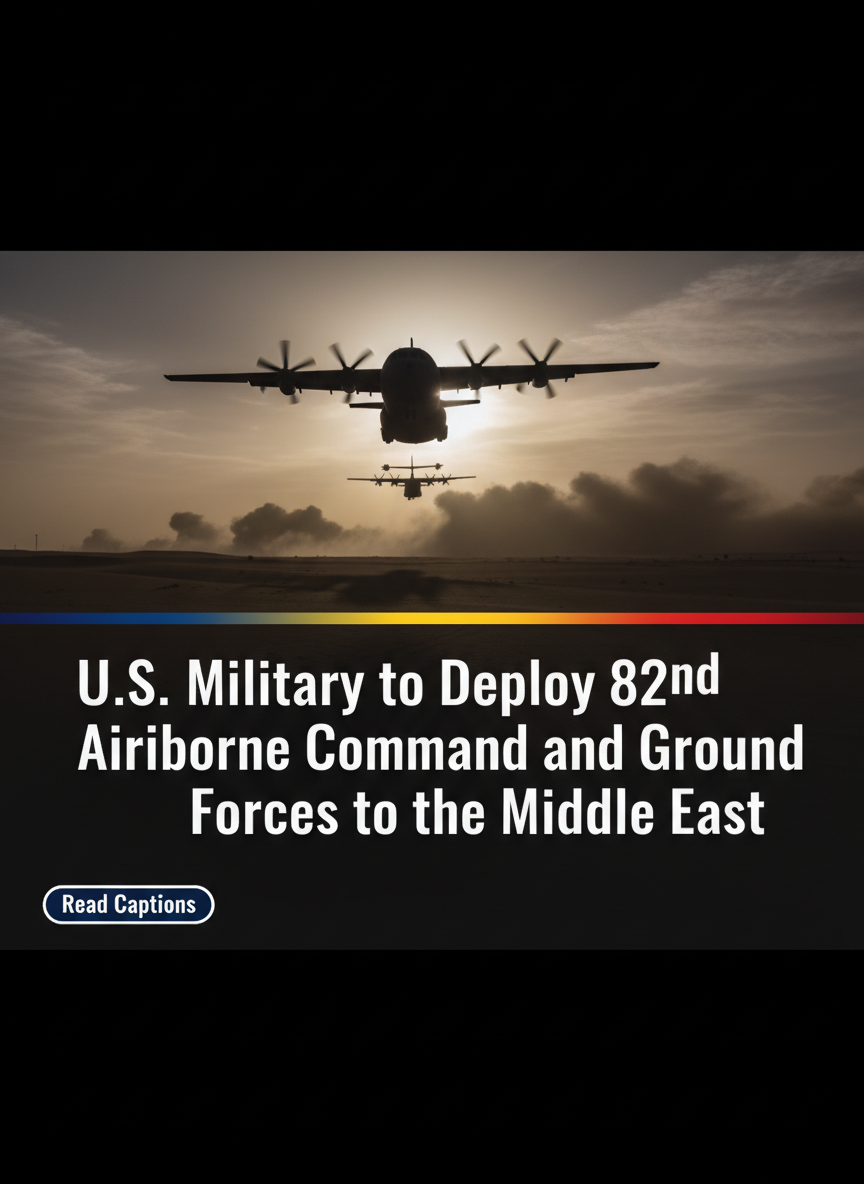
Pentagon Mobilizes 82nd Airborne Units to Middle East Amid Heightened Tensions with Iran
WASHINGTON D.C. — In a significant escalation of military readiness, the United States Department of Defense is preparing to deploy additional troops from the storied 82nd Airborne Division to the Middle East. The move comes as regional tensions with Iran reach a critical threshold, prompting a strategic shift in U.S. force posture to protect personnel and interests in the area.
Rapid Response Force Activated
According to sources familiar with the planning, the deployment will include a command element and specialized ground forces. These units are part of the Immediate Response Force (IRF), a specialized contingent of the 82nd Airborne based at Fort Liberty (formerly Fort Bragg). The IRF is designed to be airborne and “wheels up” within 18 hours of receiving orders, making them the primary choice for sudden shifts in the global security landscape.
While the exact number of troops has not been officially confirmed, the mobilization follows a standard protocol for reinforcing U.S. positions during periods of heightened threat. Military analysts suggest that the arrival of these paratroopers is intended to provide “flexible deterrent options” to regional commanders.
A Deterrent Against Escalation
The decision to bolster the U.S. presence in the Middle East is rooted in recent intelligence and a series of provocative actions in the region. U.S. officials have expressed increasing concern regarding potential Iranian-backed operations targeting American diplomatic and military sites. By deploying the 82nd Airborne, the Pentagon is sending a clear signal of resolve to Tehran.
“This is a defensive measure aimed at stabilizing the region and ensuring we have the necessary boots on the ground to respond to any contingency,” said a defense official speaking on the condition of anonymity. “The goal is deterrence, not provocation. We are ensuring that our assets are positioned to defend our allies and our people.”
Strategic Context: A Region on Edge
The Middle East has seen a spike in volatility over the past several weeks, with maritime incidents and proxy skirmishes raising the specter of a broader conflict. The deployment of the 82nd Airborne represents one of the most visible indicators that the U.S. is taking these threats seriously. Unlike traditional heavy infantry, the Airborne units provide a versatile capability, ranging from securing airfields to providing rapid reinforcements for existing installations.
International observers are watching the deployment closely. While some see it as a necessary step to maintain a balance of power, others worry that the increased military footprint could lead to a cycle of miscalculation between Washington and Tehran. However, the administration has maintained that the deployment is a proportionate response to the current threat environment.
Readiness and Next Steps
As the command elements begin their transit, the remaining units of the 82nd Airborne remain on high alert. The deployment is expected to be temporary but open-ended, depending on the security situation on the ground. Families at Fort Liberty have been briefed on the mission, and the community has historically shown immense support for the paratroopers during such rapid-notice departures.
For now, the eyes of the world remain on the Persian Gulf. The arrival of the American paratroopers marks a new chapter in the ongoing geopolitical chess match, as the U.S. seeks to navigate a path between maintaining a firm military stance and avoiding the outbreak of a full-scale regional war.