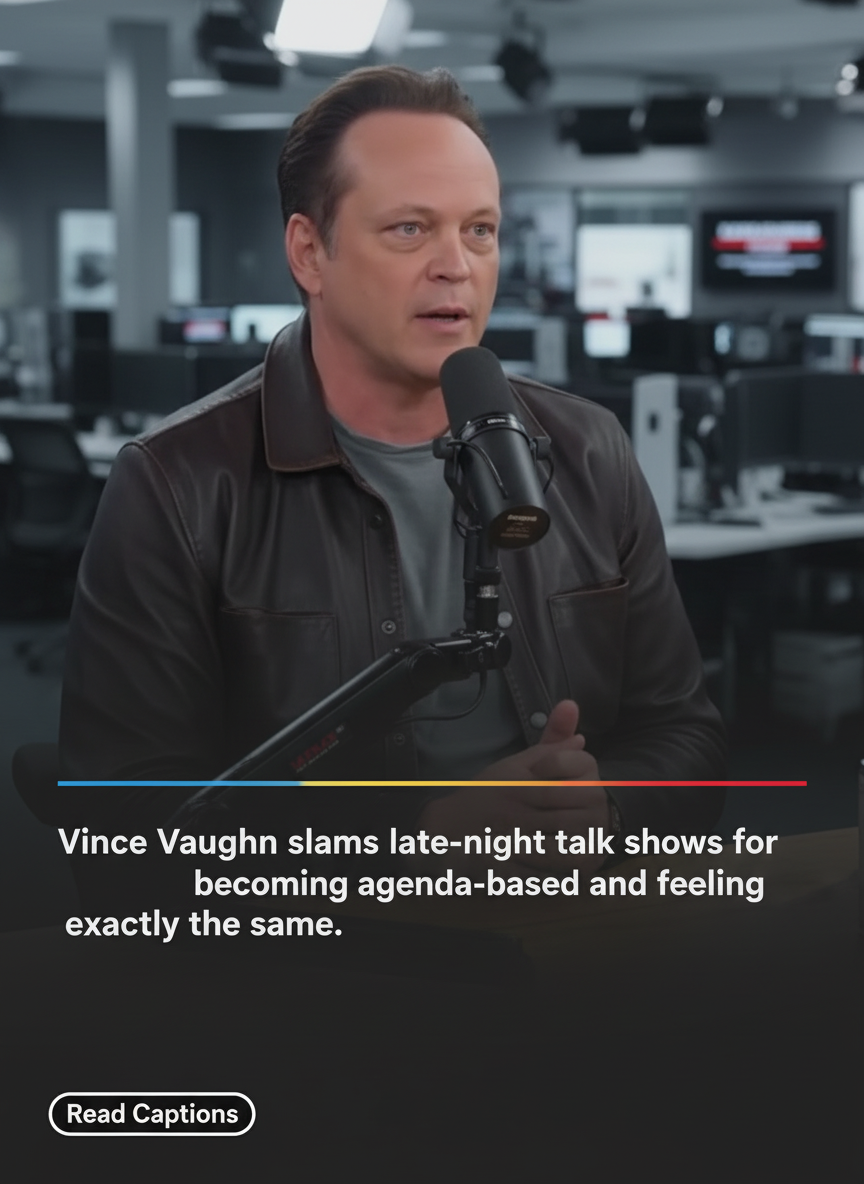
Vince Vaughn Blasts Modern Late-Night TV, Slamming ‘Agenda-Based’ Scolding and Lack of Originality
In a candid assessment of the current entertainment landscape, veteran actor Vince Vaughn has voiced sharp criticism regarding the state of late-night talk shows. The Wedding Crashers star argued that the once-vibrant medium has devolved into a predictable “monoculture,” characterized by repetitive viewpoints and a tendency to lecture rather than entertain.
The ‘Sameness’ of the Late-Night Circuit
During a recent interview, Vaughn noted that the distinction between various late-night programs has largely vanished. Where audiences once tuned in for the distinct comedic sensibilities of legends like Johnny Carson, David Letterman, or Jay Leno, Vaughn suggests that today’s hosts—including Stephen Colbert, Jimmy Kimmel, and Seth Meyers—have converged into a singular, indistinguishable voice.
“It all feels like the same person,” Vaughn remarked, pointing to the uniformity in monologue topics, punchlines, and political leanings across the major networks. He suggested that this lack of variety has made the format less of a destination for general audiences looking for a reprieve from the daily news cycle.
From Comedy to ‘Agenda-Based’ Scolding
The core of Vaughn’s critique centered on the shift from broad-based comedy to what he describes as “agenda-based” content. According to the actor, the primary goal of late-night has shifted from making people laugh to reinforcing specific political and social narratives.
Vaughn described the current atmosphere as one of “scolding,” where hosts often deliver moralizing sermons rather than lighthearted observations. This shift, he argues, alienates a significant portion of the audience who may not share the host’s specific political outlook or who simply wish to enjoy a comedy show without a side of partisan activism.
A Reflection of a Declining Medium?
Vaughn’s comments come at a time when traditional late-night television is facing a historic identity crisis. Ratings for the major network talk shows have seen a steady decline over the last decade as viewers migrate to streaming platforms and independent podcasts. Critics of the current format argue that by leaning heavily into divisive political commentary, hosts have traded a “big tent” audience for a smaller, more polarized fan base.
Vaughn’s perspective isn’t entirely an outlier in Hollywood, but it is notable coming from an A-list star who has spent decades navigating the industry. His remarks echo a growing sentiment that the “escapism” once offered by television is being replaced by a constant stream of ideological messaging.
The Search for a Neutral Ground
As the media landscape continues to fracture, the question remains whether late-night television can return to its roots as a universal entertainer. While some argue that in a hyper-political age, it is impossible for hosts to remain neutral, Vaughn’s critique suggests that there is a missed opportunity—and a hungry audience—for comedy that prioritizes humor over homework.
For now, Vaughn’s observations serve as a high-profile challenge to the status quo, reminding the industry that when everyone is saying the same thing, the audience eventually stops listening.