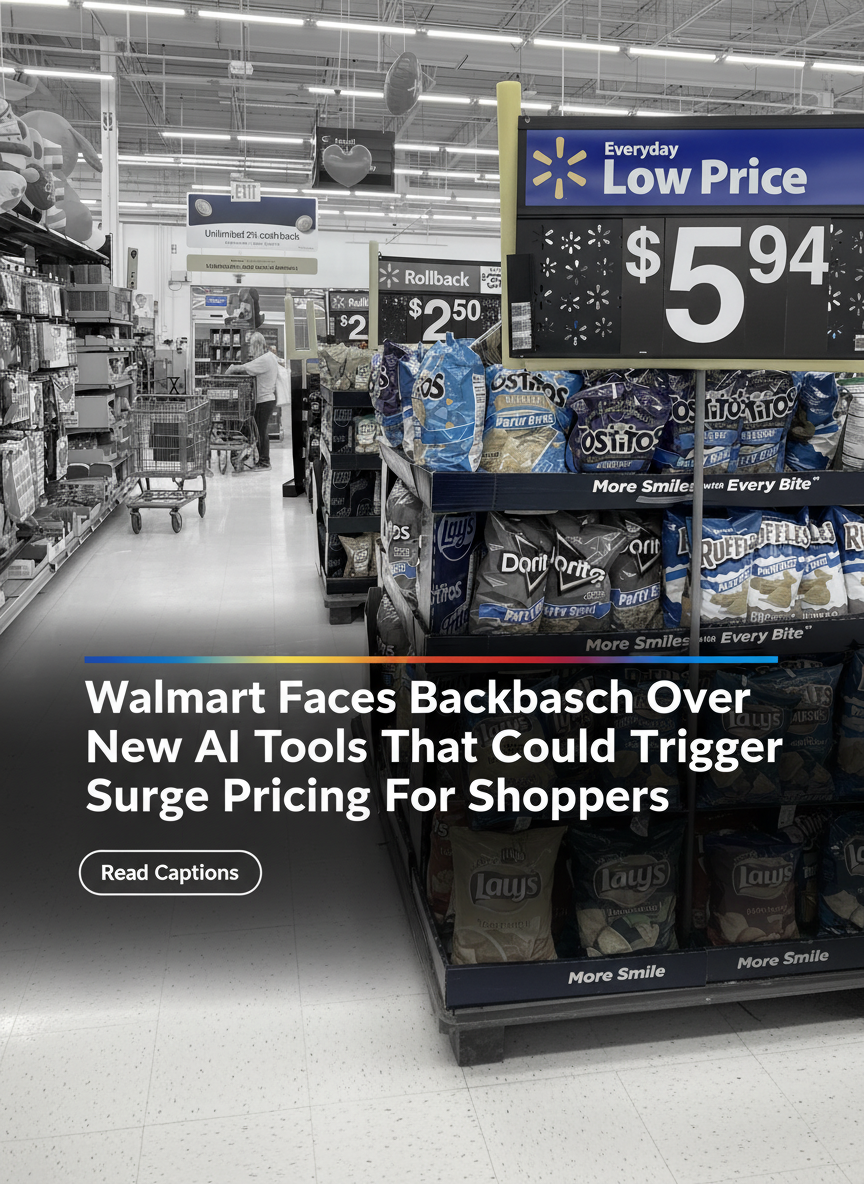
Walmart’s AI Move Could Lead to Surge Pricing — Shoppers and Experts Are Outraged: ‘This Isn’t Innovative, It’s Exploitative’
BENTONVILLE, AR — Walmart, the world’s largest retailer, is facing a wave of backlash following the nationwide implementation of its new AI-powered dynamic pricing system. While the company bills the move as a technological leap forward in operational efficiency, a growing chorus of consumer advocates, economists, and frustrated shoppers are sounding the alarm over what they describe as “surge pricing” in the grocery aisles.
The Rise of the Digital Shelf
The controversy centers on the full-scale rollout of Electronic Shelf Labels (ESLs) and a proprietary AI algorithm designed to update prices in real-time across thousands of stores. Historically, changing a price tag at Walmart was a labor-intensive manual process. Now, with the click of a button—or the trigger of an algorithm—prices can be adjusted company-wide in seconds.
Internal documents and recent pilot programs suggest the AI analyzes a variety of factors, including local demand, inventory levels, competitor pricing, and even weather patterns, to determine the “optimal” price for any given moment. However, it is the potential for prices to spike during peak hours or high-demand events that has consumers on edge.
‘Surge Pricing’ at the Grocery Store?
The term “surge pricing,” popularized by ride-sharing apps like Uber, has long been a source of frustration for consumers. Its arrival in the retail sector represents a significant shift in the American shopping experience. Critics argue that while surge pricing for a luxury ride is one thing, applying it to basic necessities like milk, eggs, and diapers is predatory.
“This isn’t innovative, it’s exploitative,” said Sarah Jennings, a senior analyst at the Consumer Watchdog Group. “Walmart is using its massive data advantage to squeeze every possible cent out of families who are already struggling with inflation. When the price of a gallon of water goes up because a storm is coming, that isn’t ‘efficiency’—it’s price gouging rebranded as tech.”
Shopper Backlash and the ‘Trust Gap’
On social media, the reaction has been swift and overwhelmingly negative. Viral videos show shoppers noticing price discrepancies between the time they pick an item off the shelf and the time they reach the checkout counter.
“I watched the price of a rotisserie chicken jump 50 cents while I was standing in the deli line,” said one shopper in a post that has garnered millions of views. “It feels like the store is playing a game where the customer always loses. I shouldn’t have to race to the register to beat an algorithm.”
Experts warn that this move could severely damage Walmart’s long-standing reputation as a “Low Price Leader.” By introducing volatility into pricing, the retailer risks alienating loyal customers who rely on price predictability to manage their household budgets.
Walmart Responds
In a statement released Friday, a Walmart spokesperson defended the technology, emphasizing that the primary goal is to reduce the workload for associates and ensure price accuracy.
“Our digital shelf labels allow our associates to spend more time assisting customers rather than changing paper tags,” the statement read. “While our systems allow for faster updates, our mission remains to provide ‘Everyday Low Prices.’ We use AI to stay competitive and ensure our customers get the best value, not to implement ‘surge pricing’ in the way critics have characterized it.”
A New Frontier in Retail
Despite the company’s assurances, the retail industry is watching closely. If Walmart successfully weathers the current storm of public outrage, other major retailers are expected to follow suit, potentially ending the era of the fixed price tag.
For now, lawmakers are beginning to take notice. Several state attorneys general have already announced inquiries into whether these AI-driven price fluctuations violate consumer protection laws or price-gouging statutes. As the “Digital Shelf” becomes the new standard, the battle between retail efficiency and consumer fairness is only just beginning.
Related: How to spot ‘hidden’ price hikes using your smartphone