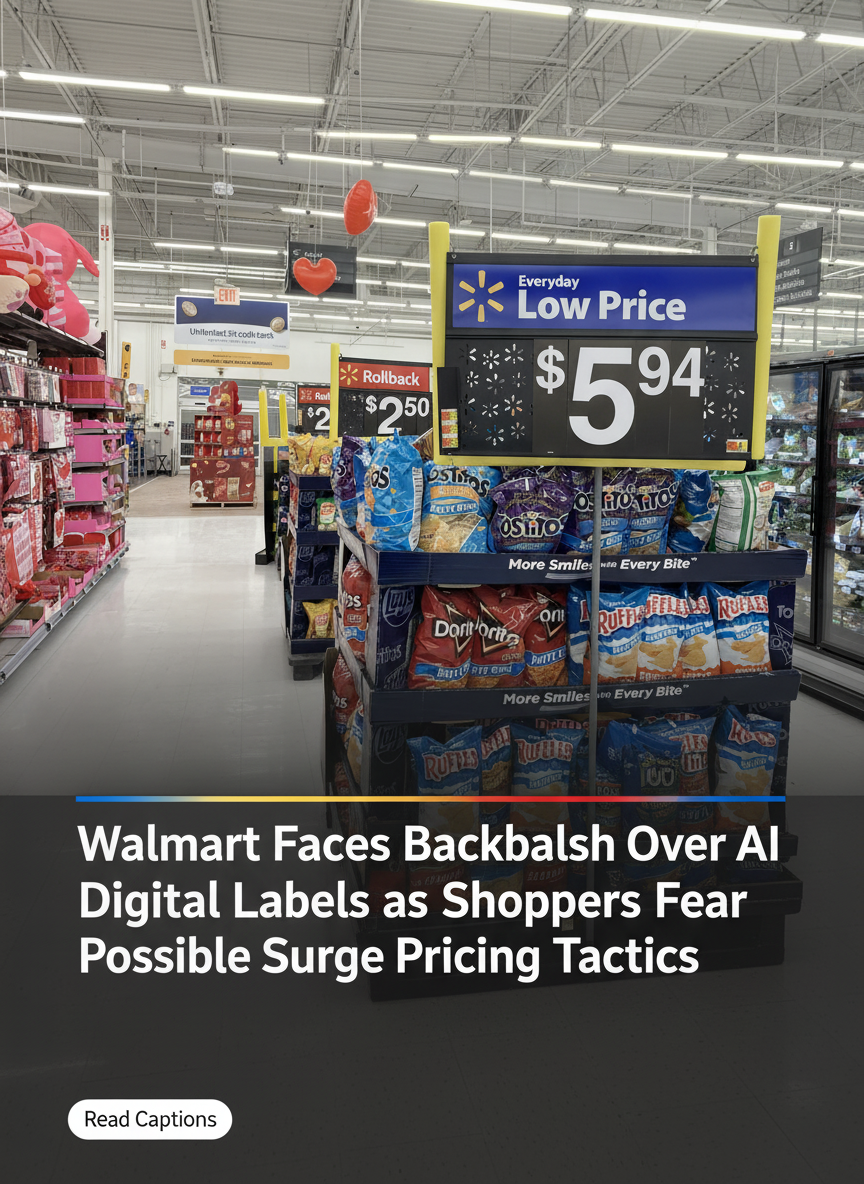
Walmart’s AI Integration Sparks Surge Pricing Fears: ‘This Isn’t Innovative, It’s Exploitative’
BENTONVILLE, AR — Walmart, the world’s largest retailer, is facing a wave of backlash from consumers and retail experts following the latest expansion of its AI-driven “Digital Shelf Label” (DSL) system. While the company touts the technology as a breakthrough in operational efficiency, critics are sounding the alarm, warning that the infrastructure is a “Trojan horse” for surge pricing in the grocery aisles.
The Rise of the Digital Aisle
The controversy centers on the nationwide rollout of electronic shelf labels, which replace traditional paper price tags with digital screens. These labels allow Walmart to update prices across thousands of items in minutes from a centralized AI-driven server. By the end of 2026, the retailer expects the technology to be active in over 2,300 stores.
Walmart maintains that the move is designed to simplify the workload for employees, who previously spent hours manually swapping paper tags. The system also integrates with AI to notify staff when items are out of stock or nearing their expiration dates, allowing for automated markdowns to reduce food waste.
‘Exploitative’ or Efficient?
Despite the corporate optimism, the transition has ignited a firestorm on social media and among consumer advocacy groups. The fear is that Walmart will adopt a “dynamic pricing” model—similar to ride-sharing apps like Uber or airline ticketing—where the cost of a gallon of milk or a box of cereal could spike during peak shopping hours or high-demand weather events.
“This isn’t innovative, it’s exploitative,” said one retail analyst in a statement to news outlets. “When you give an algorithm the power to change prices in real-time, the temptation to capitalize on a busy Saturday morning or a pre-storm rush becomes a matter of corporate fiduciary duty. The consumer loses every time transparency is sacrificed for ‘efficiency.’”
Shoppers have shared similar sentiments, with many expressing concern that the “everyday low prices” Walmart is known for could become a thing of the past. “I don’t want to have to check my phone to see if the price of bread changed between the time I walked into the store and the time I reached the register,” said one disgruntled shopper in New Jersey.
Walmart Fires Back
Walmart has been quick to dismiss the allegations of “surge pricing,” a term that has become a lightning rod for consumer frustration in recent years. A company spokeswoman addressed the growing concerns directly this week, attempting to put the rumors to rest.
“We don’t participate in surge pricing,” the spokeswoman said. “The goal of these digital labels is to provide price accuracy for our customers and to free up our associates to better serve them. Our pricing strategy remains focused on providing the best value every day, not on fluctuating prices based on store traffic.”
A Slippery Slope for Retail
While Walmart denies any move toward dynamic pricing, industry observers note that the technological capability is now firmly in place. Economists argue that once the infrastructure for instant price changes is normalized, it may be difficult for retailers to resist the urge to optimize margins through AI-led adjustments.
“Walmart is setting the standard for the future of retail,” says Dr. Elena Rodriguez, a professor of consumer behavior. “While they may not be using surge pricing today, they have built the perfect engine for it. The real test will be how they use this AI during the next supply chain crunch or period of high inflation.”
The Bottom Line
As the rollout continues, Walmart finds itself at a crossroads between technological advancement and consumer trust. While the digital labels may save the company millions in labor costs and reduce waste, the “creep” of AI into the basic cost of living remains a sensitive point for a public already weary of rising prices. For now, the “Surge Pricing” label is one Walmart is desperate to avoid, even as its shelves go digital.