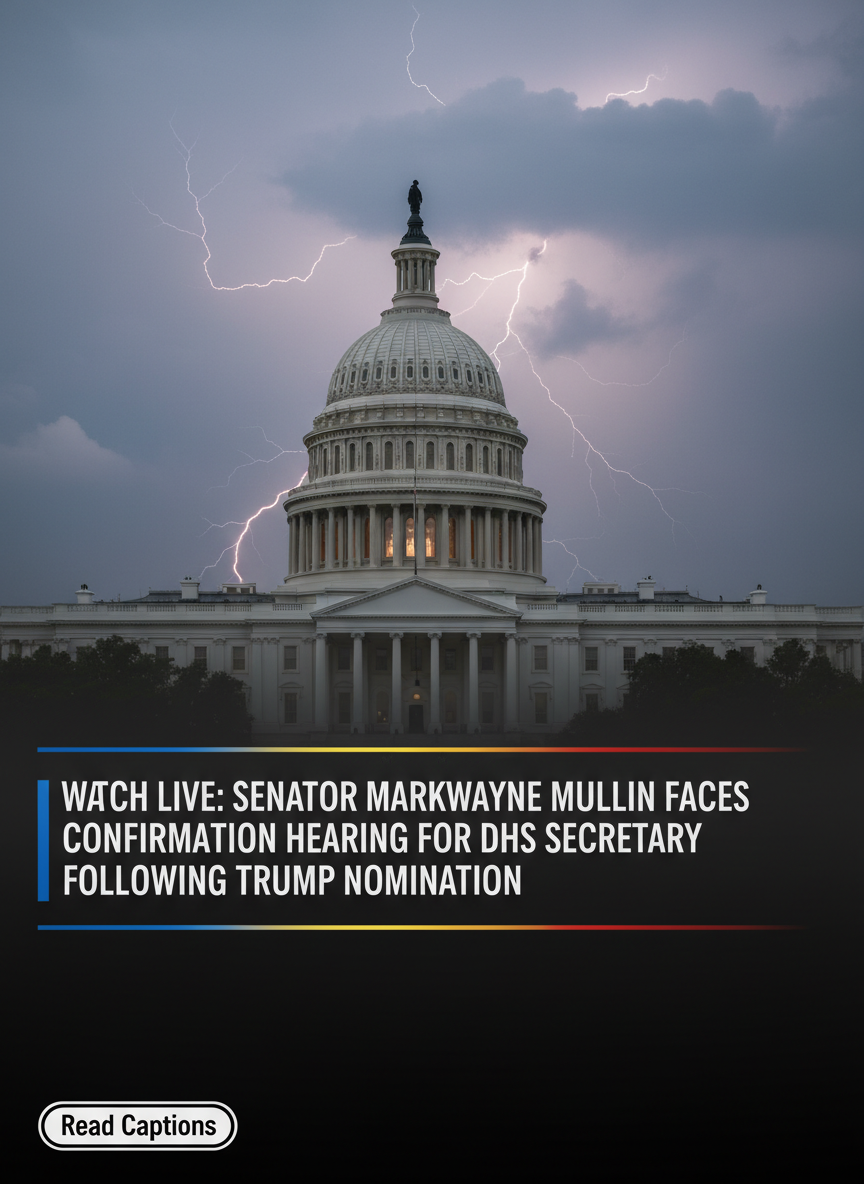
A New Chapter for DHS: Senator Markwayne Mullin Faces High-Stakes Confirmation Hearing for Homeland Security Secretary
WASHINGTON — The Senate floor became the center of national security discourse on Wednesday as Senator Markwayne Mullin (R-OK) appeared before his colleagues for a high-stakes confirmation hearing. Nominated by President Donald Trump to lead the Department of Homeland Security (DHS), Mullin finds himself at the center of an administration pivot following the withdrawal of the President’s initial pick, Kristi Noem.
A Sudden Shift in Leadership
The path to today’s hearing was anything but linear. President Trump’s decision to tap Senator Mullin came after former South Dakota Governor Kristi Noem’s nomination faced mounting hurdles. Described by political insiders as “embattled” following a series of controversies that threatened her path to confirmation, Noem ultimately stepped aside, clearing the way for Mullin—a staunch Trump ally with a reputation for a “no-nonsense” approach to governance.
Mullin, a former professional mixed martial arts fighter and business owner who transitioned into a career in the House and later the Senate, is viewed by the administration as a fighter capable of navigating the complex bureaucracy of the DHS while maintaining the aggressive border policies central to the Trump platform.
Prioritizing Border Security and Enforcement
In his opening statement, Senator Mullin wasted no time addressing the primary concern of the committee: the southern border. Highlighting his legislative record, Mullin emphasized a “security-first” doctrine, advocating for the reinstatement of “Remain in Mexico” policies and a surge in resources for U.S. Customs and Border Protection (CBP).
“The American people have sent a clear message: they want a secure border and a return to the rule of law,” Mullin told the committee. “As Secretary, my mission will be simple: protect the homeland, support our frontline agents, and ensure that our immigration system serves the interests of the United States.”
Bipartisan Scrutiny and Political Stakes
While Mullin enjoys broad support from his Republican colleagues, Democratic members of the committee raised sharp questions regarding his lack of direct executive experience in law enforcement or emergency management. Ranking members grilled the Senator on his plans for FEMA’s disaster response capabilities and the Department’s strategy for handling cybersecurity threats from foreign adversaries.
The hearing also touched on the logistical challenges of the administration’s proposed mass deportation efforts. Critics expressed concern over the humanitarian and economic impacts, while Mullin maintained that “enforcement is not optional” when it comes to federal law.
From the Octagon to the Cabinet
Mullin’s unique background has been a recurring theme throughout the proceedings. Supporters point to his experience as a small business owner in Oklahoma as evidence of his ability to manage large-scale operations and budgets. His supporters argue that his “outsider” perspective is exactly what is needed to overhaul a department that has often been criticized for inefficiency.
If confirmed, Mullin will inherit one of the most sprawling and scrutinized agencies in the federal government, overseeing everything from airport security (TSA) and the Secret Service to the Coast Guard and national disaster recovery.
The Path Forward
As the hearing concludes, the Senate Homeland Security and Governmental Affairs Committee will move toward a vote to report Mullin’s nomination to the full Senate. Given the current GOP majority and Mullin’s existing relationships within the chamber, political analysts expect a swift confirmation process.
For the Trump administration, the successful installation of Mullin at DHS is seen as a critical milestone in implementing its second-term agenda. With the eyes of the nation on the U.S. Capitol, Markwayne Mullin stands on the precipice of trading his Senate seat for one of the most powerful roles in the President’s Cabinet.
Stay tuned for live updates and further analysis as the Senate continues the confirmation process for President Trump’s Cabinet nominees.