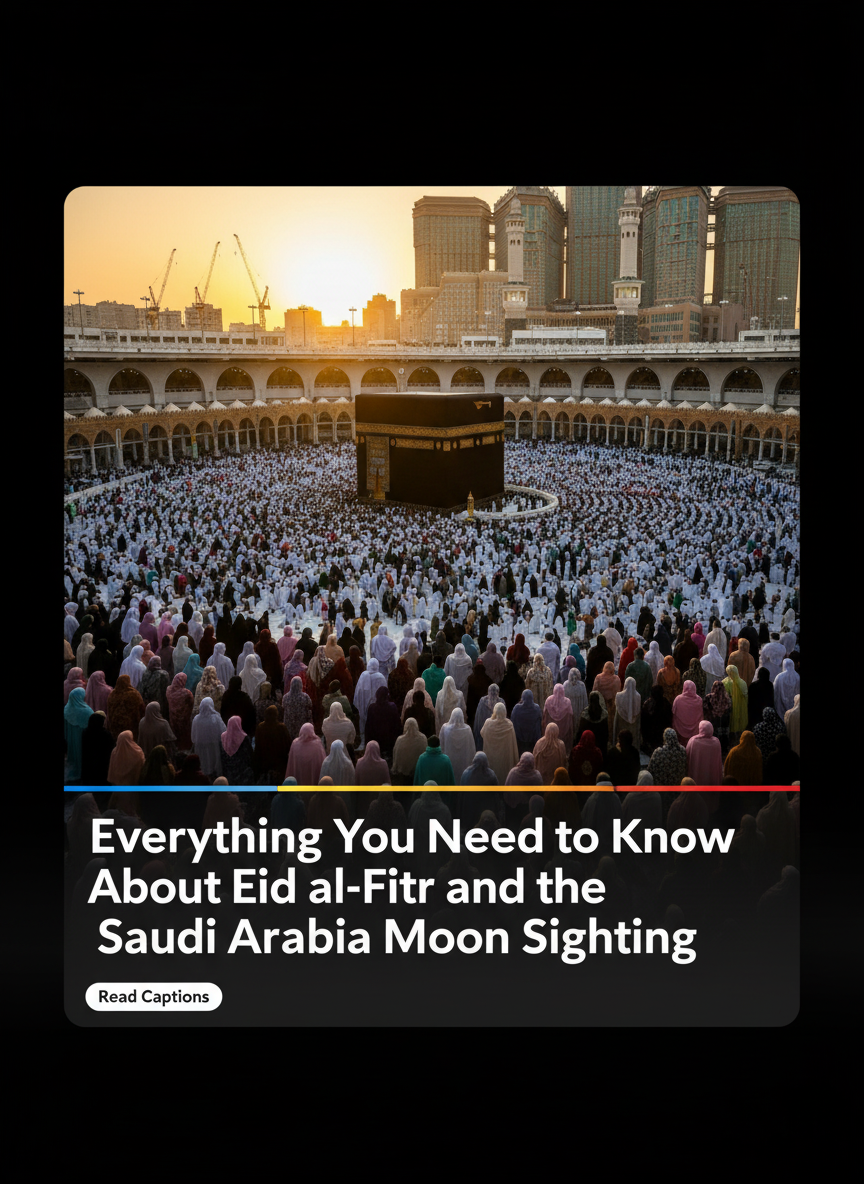
Beyond the Fast: Global Muslim Community Awaits Moon Sighting to Mark Eid al-Fitr 2026
As the holy month of Ramadan nears its conclusion, millions of Muslims around the world are turning their eyes toward the night sky. The search for the crescent moon—particularly in Saudi Arabia—has become a trending global event, signaling the end of a month of fasting and the beginning of Eid al-Fitr, one of the most significant holidays in the Islamic calendar.
The Significance of the Moon Sighting
Because the Islamic calendar is lunar, the start and end of religious months depend on the sighting of the new moon. For 2026, astronomers and religious committees are closely monitoring the horizon to determine exactly when the month of Ramadan ends and the month of Shawwal begins.
Traditionally, Saudi Arabia’s moon-sighting committee leads the way, using both high-powered telescopes and the naked eye to spot the “hilal” (crescent). Once the moon is officially sighted, the declaration of Eid is broadcast globally, triggering a wave of celebration across time zones from Indonesia to the United States.
What is Eid al-Fitr?
Translated from Arabic as the “Festival of Breaking the Fast,” Eid al-Fitr is a reward for the spiritual discipline practiced during Ramadan. For the past 29 or 30 days, observant Muslims have abstained from food and drink from dawn until sunset, focusing instead on prayer, reflection, and self-restraint.
Eid al-Fitr is not just a celebration of the return to normal eating habits, but a day of profound gratitude. It serves as a time to thank Allah for the strength provided during the fast and to celebrate the spiritual growth achieved throughout the month.
Traditions: Prayer, Charity, and Community
While celebrations vary across cultures, several core traditions define the holiday worldwide:
- The Eid Prayer: On the morning of Eid, Muslims gather in large open spaces or mosques for a special congregational prayer known as Salat al-Eid.
- Zakat al-Fitr: Before the prayer begins, Muslims are required to give a specific act of charity—usually in the form of food or money—to ensure that even those in poverty can join in the festivities.
- New Beginnings: It is customary to wear new clothes, symbolize a fresh start. Many children receive “Eidi”—gifts of money or toys—from elder relatives.
- Feasting: Known as the “Sweet Eid,” many cultures prepare specific desserts to celebrate, such as baklava in Turkey, maamoul in the Levant, or sheer khurma in South Asia.
A Global Message of Peace
The universal greeting during this time is “Eid Mubarak,” which translates to “Blessed Eid.” In a world often marked by division, the holiday serves as a powerful reminder of community and shared humanity. Beyond the festivities, the core message of Eid al-Fitr is one of reconciliation, forgiveness, and looking out for one’s neighbor.
Looking Ahead
As the 2026 moon sighting reports continue to trend, the excitement is palpable. Whether the moon is sighted tonight or tomorrow, the spirit of the holiday remains the same: a vibrant conclusion to a month of sacrifice and a joyful invitation to celebrate the blessings of life with family and friends.